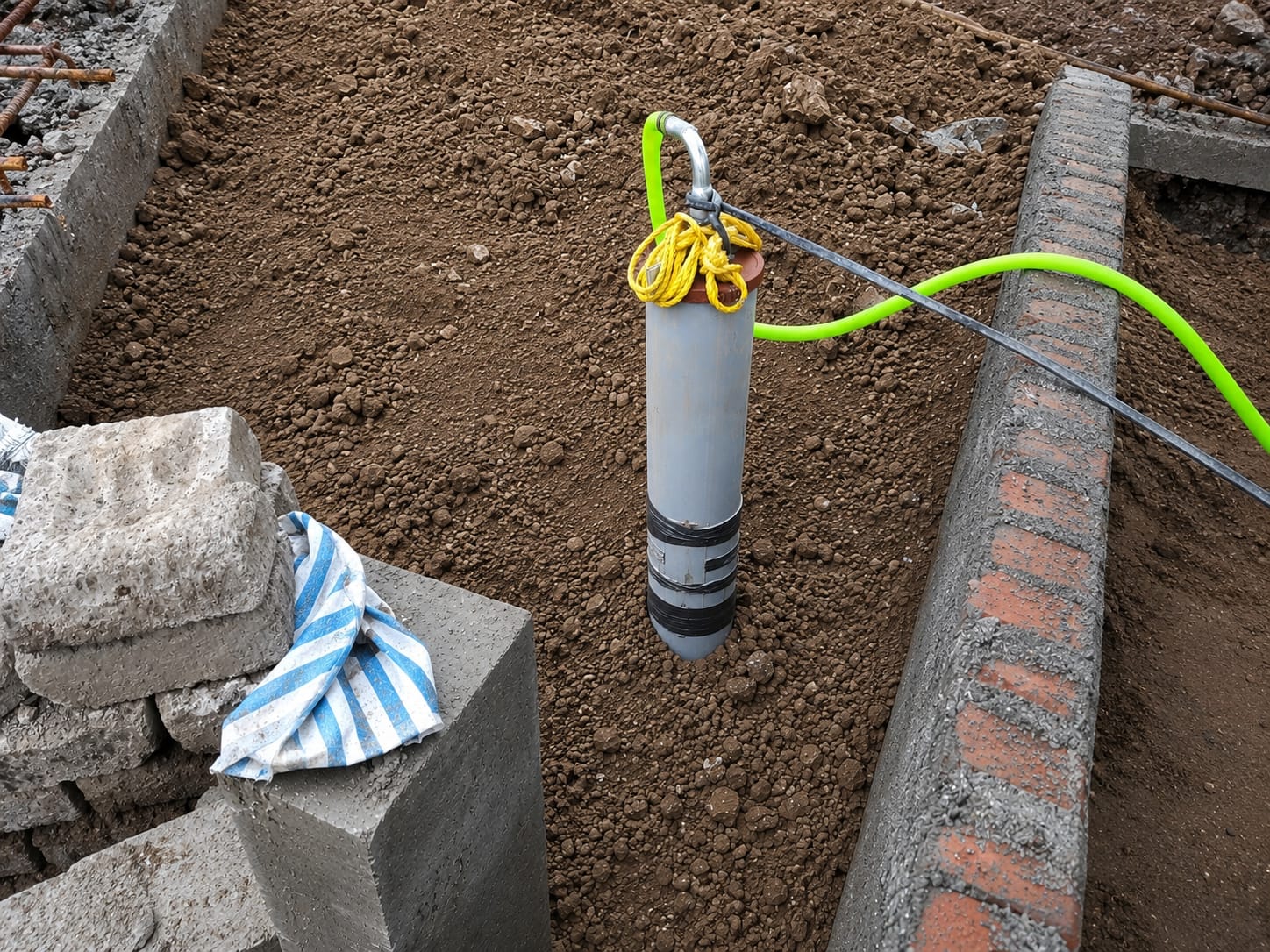
Borewell Motor Pump Capacity Selection and Cost of Accessories
Choosing the correct borewell motor pump is essential for ensuring a reliable water supply, reducing electricity consumption, and increasing the lifespan of the pumping system. A properly selected motor delivers sufficient water while operating efficiently. Apart from the motor itself, several accessories such as pipes, cables, starter panels, adapters, and fittings are required for a complete installation.
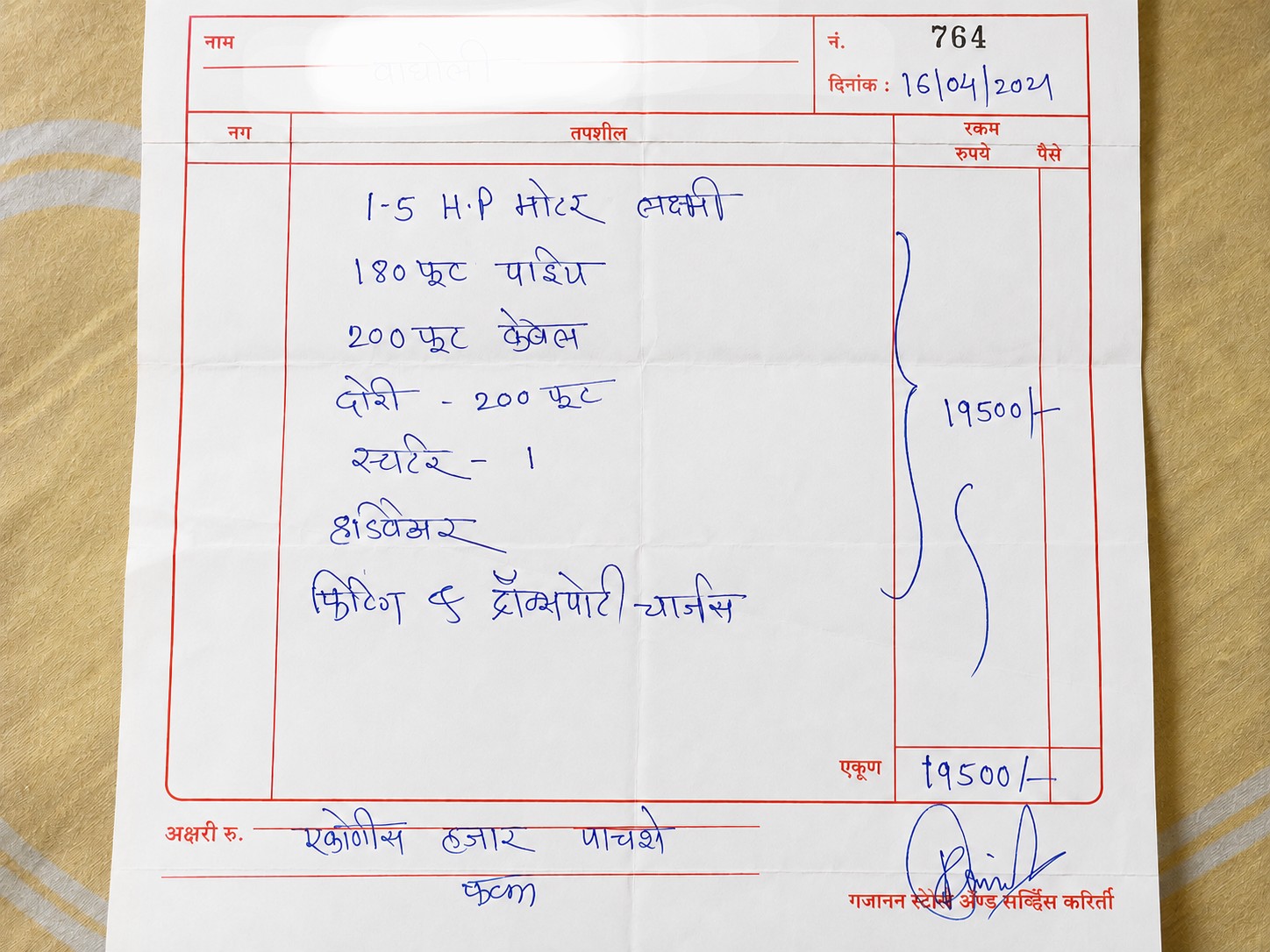
Based on a typical borewell installation bill, the setup may include a 1.5 HP motor, around 180 feet of column pipe, 200 feet of submersible cable, a starter panel, adapters, and various fittings. Understanding these components helps homeowners estimate the overall project cost and select the right equipment.
Importance of Selecting the Correct Motor Capacity
The capacity of a borewell motor directly affects water delivery, energy consumption, and maintenance costs.
Benefits of selecting the correct motor include:
- Reliable water supply
- Lower electricity bills
- Longer motor life
- Reduced maintenance expenses
- Better water pressure
- Improved efficiency
An undersized motor may fail to provide adequate water, while an oversized motor can increase electricity consumption unnecessarily.
Factors Affecting Borewell Motor Capacity Selection
Borewell Depth
The depth of the borewell is one of the most important considerations when selecting a motor.
General recommendations:
- Up to 100 feet – 0.5 HP to 1 HP
- 100 to 200 feet – 1 HP to 1.5 HP
- 200 to 350 feet – 1.5 HP to 2 HP
- 350 to 500 feet – 2 HP to 3 HP
- Above 500 feet – 3 HP and above
Static Water Level
Static water level refers to the depth at which water stands inside the borewell when the pump is not operating.
For example:
- Borewell depth – 250 feet
- Water level – 120 feet
The motor primarily lifts water from the water level rather than the bottom of the borewell.
Daily Water Requirement
Water demand depends on the number of occupants and usage pattern.
Typical residential requirements:
- Small family – 500 to 1000 litres per day
- Medium family – 1000 to 2000 litres per day
- Large family – 2000 to 5000 litres per day
Delivery Head
The delivery head is the total vertical distance the motor must pump water.
Factors affecting delivery head include:
- Height of overhead tank
- Pipe length
- Number of bends and fittings
- Pipe diameter
Higher delivery heads require more powerful motors.
Electrical Supply
Motor selection also depends on the available electrical connection.
Common options include:
- Single-phase motors for homes
- Three-phase motors for commercial and agricultural applications
Most residential borewells use single-phase motors between 1 HP and 2 HP.
Common Borewell Motor Capacities
1 HP Motor
Suitable for:
- Shallow borewells
- Small houses
- Low water demand
Advantages:
- Lower operating cost
- Affordable installation
- Easy maintenance
1.5 HP Motor
A 1.5 HP motor is among the most common choices for residential applications.
Suitable for:
- Borewells between 150 and 300 feet
- Medium-sized homes
- Regular household water requirements
The sample bill indicates the use of a 1.5 HP motor with approximately 180 feet of pipe installation.
2 HP Motor
Suitable for:
- Deep borewells
- Larger households
- Higher water demand
Benefits:
- Better discharge
- Faster tank filling
- Improved performance at greater depths
3 HP and Above
Typically used for:
- Agricultural irrigation
- Commercial buildings
- Industrial water systems
These installations generally require heavier cables and stronger accessories.
Accessories Required for Borewell Motor Installation
Column Pipe
The column pipe carries water from the submersible motor to the surface.
Common options include:
- HDPE pipe
- PVC pipe
- GI pipe
The installation bill shows approximately 180 feet of pipe used.
Submersible Cable
The cable provides power to the motor.
Example:
- Motor installation depth – 180 feet
- Cable required – approximately 200 feet
Quality cables improve efficiency and safety.
Starter Panel
The starter panel protects the motor from:
- Overloading
- Voltage fluctuations
- Short circuits
- Dry running
Modern digital starters provide additional protection features.
Adapters and Couplings
These fittings connect different sections of pipe and ensure leak-free performance.
Benefits include:
- Strong joints
- Easy maintenance
- Reliable operation
Cable Clamps
Cable clamps secure the electrical cable along the pipe.
Advantages:
- Prevent cable damage
- Improve safety
- Increase cable lifespan
Safety Rope
A safety rope provides additional support to the motor assembly and simplifies retrieval during maintenance.
Estimated Cost of Borewell Accessories
Actual costs vary depending on brand, location, and material quality.
Typical price ranges:
- 1.5 HP submersible motor – ₹8,000 to ₹18,000
- HDPE/PVC pipe – ₹25 to ₹80 per foot
- Submersible cable – ₹20 to ₹60 per foot
- Starter panel – ₹2,000 to ₹8,000
- Adapters and fittings – ₹500 to ₹3,000
- Cable clamps and accessories – ₹500 to ₹2,000
- Installation charges – ₹2,000 to ₹10,000
A complete residential installation generally costs between ₹20,000 and ₹60,000 depending on depth and material quality.
Tips for Reducing Installation and Maintenance Costs
- Select the correct motor size.
- Use high-quality cables and pipes.
- Install dry-run protection.
- Purchase products from reputed manufacturers.
- Perform regular maintenance.
- Avoid oversizing the motor.
Investing in quality accessories often reduces repair and replacement expenses over the long term.
Conclusion
Selecting the correct borewell motor pump capacity is crucial for ensuring efficient and uninterrupted water supply. Factors such as borewell depth, water level, daily consumption, and delivery head should be carefully evaluated before choosing a motor. For many residential properties, a 1.5 HP submersible motor provides an ideal balance between performance and energy efficiency.
In addition to the motor, accessories such as pipes, cables, starter panels, adapters, and fittings play a vital role in system reliability. A well-designed installation using quality materials helps reduce maintenance costs, improve efficiency, and ensure a dependable water supply for years to come.
How to Calculate Total Dynamic Head (TDH)
Total Dynamic Head (TDH) is one of the most important factors when selecting a borewell motor pump. TDH represents the total height through which the pump must lift water, including all friction losses in the piping system.
The formula for calculating TDH is:
- TDH = Static Water Level + Delivery Height + Friction Losses
For example:
- Static water level = 120 feet
- Overhead tank height = 25 feet
- Friction losses in pipe = 10 feet
Therefore:
- TDH = 120 + 25 + 10
- TDH = 155 feet
In this example, the motor should be capable of delivering the required water discharge at a head of approximately 155 feet.
Factors affecting TDH include:
- Borewell water level
- Height of storage tank
- Pipe diameter
- Pipe length
- Number of bends and fittings
A higher TDH generally requires a higher-capacity motor. Calculating TDH correctly helps avoid under-sizing or over-sizing the pump.
Difference Between 1 HP, 1.5 HP, and 2 HP Borewell Pumps
Choosing between a 1 HP, 1.5 HP, and 2 HP pump depends on borewell depth and water requirements.
1 HP Borewell Pump
Suitable for:
- Borewells up to approximately 150 feet
- Small homes
- Low to moderate water demand
Advantages:
- Lower purchase cost
- Lower electricity consumption
- Easy maintenance
Limitations:
- Lower water discharge
- Not suitable for deep borewells
1.5 HP Borewell Pump
Suitable for:
- Borewells between 150 and 300 feet
- Medium-sized homes
- Daily domestic water usage
Advantages:
- Good balance between power and efficiency
- Suitable for most residential applications
- Faster tank filling compared to 1 HP pumps
Limitations:
- Slightly higher power consumption than 1 HP models
2 HP Borewell Pump
Suitable for:
- Borewells deeper than 300 feet
- Large homes
- Multiple bathrooms and water outlets
Advantages:
- Higher discharge capacity
- Better performance at greater depths
- Suitable for larger water requirements
Limitations:
- Higher electricity consumption
- Higher installation cost
In most residential borewell installations, a 1.5 HP pump provides the best combination of performance and energy efficiency.
Common Mistakes While Selecting Borewell Motors
Many homeowners make mistakes while selecting borewell motors, resulting in higher costs and reduced performance.
Choosing a Motor Based Only on Borewell Depth
Motor selection should consider:
- Water level
- Delivery height
- Water requirement
- Pipe losses
Depth alone is not sufficient.
Oversizing the Motor
A larger motor does not always mean better performance.
Problems caused by oversizing include:
- Increased electricity bills
- Higher equipment cost
- Unnecessary wear and tear
Ignoring Water Yield
Some borewells have limited water availability.
Installing a high-capacity motor in a low-yield borewell can result in:
- Dry running
- Motor overheating
- Reduced motor life
Using Low-Quality Accessories
Cheap cables, pipes, and fittings may reduce the overall life of the system.
Common issues include:
- Voltage drop
- Pipe leakage
- Frequent maintenance
Not Installing Protection Devices
Motor protection systems are essential.
Important protection devices include:
- Dry-run protection
- Overload protection
- Voltage protection
- Short-circuit protection
Ignoring these protections can lead to costly motor failures.
Maintenance Tips for Submersible Pumps
Proper maintenance helps improve performance and extend pump life.
Monitor Electricity Supply
Voltage fluctuations can damage motors.
Recommendations:
- Use a quality starter panel
- Install voltage protection devices
- Check electrical connections regularly
Inspect Pipes and Fittings
Periodic inspection helps identify:
- Water leakage
- Loose joints
- Damaged fittings
Early repairs can prevent larger problems.
Avoid Dry Running
Dry running occurs when the pump operates without sufficient water.
This can cause:
- Motor overheating
- Reduced efficiency
- Permanent damage
Dry-run protection devices should always be installed.
Clean the Storage Tank
A dirty storage tank can affect water quality and place additional strain on the pumping system.
It is recommended to:
- Clean tanks regularly
- Remove sediment buildup
- Inspect inlet and outlet connections
Check Cable Condition
Submersible cables should be inspected periodically for:
- Insulation damage
- Loose connections
- Signs of wear
Damaged cables can lead to power loss and motor failure.
Schedule Periodic Maintenance
Regular servicing helps identify issues before they become serious.
Routine maintenance should include:
- Electrical inspection
- Starter panel testing
- Water discharge monitoring
- Inspection of fittings and accessories
Proper maintenance can significantly increase the lifespan of both the motor and the accessories while ensuring uninterrupted water supply.