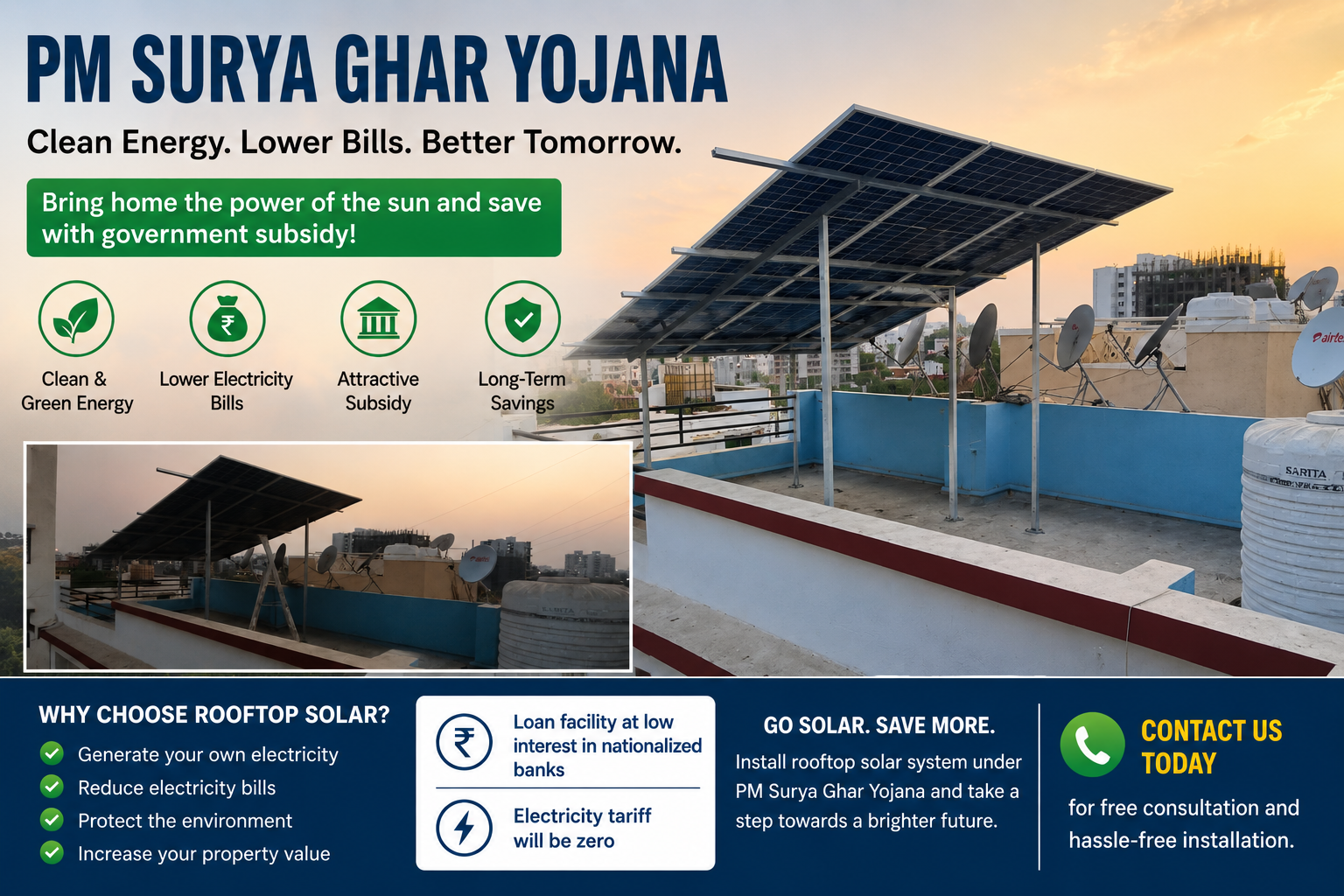
PM Surya Ghar Yojana: Transforming Indian Homes with Solar Energy
The PM Surya Ghar Muft Bijli Yojana is a flagship initiative of the Government of India aimed at promoting rooftop solar installations for residential households. The scheme helps homeowners generate clean electricity from sunlight while reducing their monthly power bills. By providing attractive subsidies and financial assistance, the government has made solar energy more affordable and accessible for families across the country.
With increasing electricity consumption and rising energy costs, rooftop solar systems offer a practical solution for homeowners. The scheme not only reduces dependence on conventional electricity but also supports India's transition towards renewable energy and environmental sustainability.
What is PM Surya Ghar Muft Bijli Yojana?
PM Surya Ghar Muft Bijli Yojana is a government-backed program that encourages households to install rooftop solar systems. Under this scheme, eligible homeowners receive financial support to offset installation costs. The primary objective is to promote clean energy generation, reduce electricity expenses, and increase the adoption of renewable energy throughout India.
The scheme is designed to benefit millions of households by enabling them to generate electricity directly from sunlight. This reduces the burden on the power grid and helps families save money over the long term.
Benefits of Installing Rooftop Solar
Lower Electricity Bills
One of the most significant advantages of rooftop solar systems is the reduction in electricity bills. Homeowners can use the electricity generated by their solar panels during the day, thereby reducing their dependence on grid power.
Government Subsidy
The government provides financial assistance to eligible households under the PM Surya Ghar scheme. This subsidy reduces the initial investment required for solar installation, making the technology affordable for more families.
Clean and Green Energy
Solar power is a renewable and environmentally friendly energy source. Unlike conventional electricity generation, solar energy produces no harmful emissions during operation, helping reduce pollution and carbon footprints.
Long-Term Savings
Solar panels typically have a lifespan of 25 years or more. Once installed, they continue generating electricity for many years, resulting in substantial savings over time.
Increased Property Value
Homes equipped with rooftop solar systems often attract greater interest from buyers due to lower operating costs and sustainable energy features.
How a Rooftop Solar System Works
A rooftop solar system converts sunlight into electricity using photovoltaic (PV) panels. These panels capture solar energy and generate direct current (DC) electricity. An inverter then converts DC electricity into alternating current (AC), which powers household appliances.
Any excess electricity generated can be exported to the grid through net metering, subject to local regulations. This allows homeowners to maximize the benefits of their solar installation.
Eligibility Criteria
To apply for the PM Surya Ghar scheme, applicants generally need to:
- Own a residential property.
- Have a suitable rooftop for solar installation.
- Possess a valid electricity connection.
- Meet the guidelines established by local electricity distribution companies and government authorities.
Applicants should always verify the latest eligibility requirements through the official government portal.
Application Process
Step 1: Registration
Homeowners register on the official PM Surya Ghar portal using their electricity consumer details.
Step 2: Vendor Selection
Applicants select an approved solar installation vendor from the authorized list.
Step 3: Technical Approval
The local electricity distribution company reviews the application and grants technical approval.
Step 4: Installation
The authorized vendor installs the rooftop solar system according to approved specifications.
Step 5: Inspection and Commissioning
Officials inspect the installed system and approve it for operation.
Step 6: Subsidy Transfer
After successful commissioning, the subsidy amount is transferred directly to the beneficiary's bank account.
Financing Options
Many nationalized banks and financial institutions offer low-interest loans for rooftop solar installations. These financing options help homeowners manage the upfront cost and make solar adoption easier.
Loan facilities can significantly reduce the financial burden, allowing households to start saving on electricity bills immediately after installation.
Choosing the Right Solar Vendor
Selecting an experienced and authorized solar installer is essential. Homeowners should evaluate:
- Government authorization status.
- Industry experience.
- Product quality and certifications.
- Warranty coverage.
- Customer reviews.
- Maintenance and after-sales support.
Working with a trusted installer ensures optimal system performance and long-term reliability.
Environmental Impact
Every rooftop solar installation contributes to a cleaner environment. Solar energy reduces dependence on fossil fuels, lowers greenhouse gas emissions, and supports India's renewable energy goals.
By adopting solar power, homeowners become active participants in protecting the environment for future generations.
Conclusion
PM Surya Ghar Muft Bijli Yojana is a transformative initiative that enables homeowners to harness the power of the sun. Through government subsidies, affordable financing, and simplified application procedures, the scheme makes rooftop solar installations more accessible than ever before.
Homeowners who invest in solar energy can enjoy lower electricity bills, long-term savings, energy independence, and environmental benefits. As India continues its journey toward a sustainable future, rooftop solar systems will play a vital role in creating cleaner, greener, and more energy-efficient communities.